

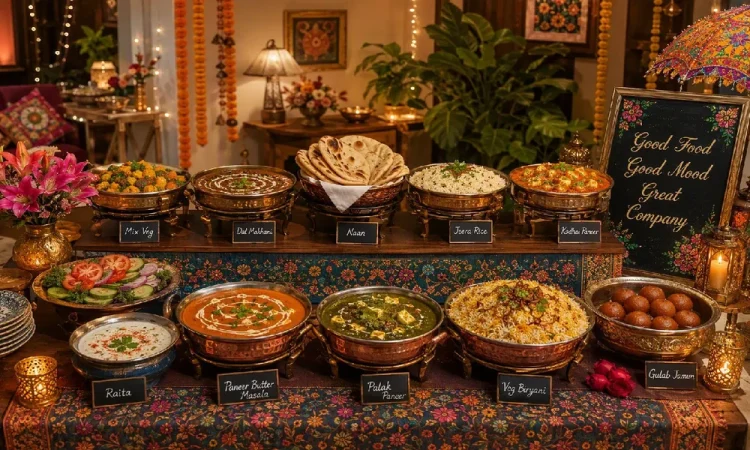

Small events have their own catering problem. They are too large for a home-cooked meal, yet too small to justify a full buffet with staff, warmers and table skirting. Ordering mini catering singapore fills that gap with compact spreads designed for around ten to twenty-five people. This article looks at the different ways a mini buffet can be set up, so you can choose a format that suits your space, your guests and the kind of event you are hosting.
What Makes a Mini Buffet Different
A full buffet typically involves heated chafing dishes, decorated tables and sometimes on-site staff. A mini buffet is simpler. Food arrives cooked and packed in disposable trays, with cutlery included, ready to be placed on a table and served. There is no equipment to return and no set-up crew to schedule around. This makes it well suited to office meetings, home gatherings, small workshops and religious occasions where the focus is on the people rather than the presentation. The trade-off is that food is served at room temperature or reheated in a microwave rather than kept hot for hours.
The Basic Tray Layout
The simplest set-up places all trays on a single table in the order guests will serve themselves. Start with plates and cutlery, then rice or noodles, followed by mains, vegetables and finally dessert. This flow keeps the queue moving and stops people from doubling back. Leave a little space between trays so serving spoons have somewhere to rest. For most small events, this straightforward layout is all that is needed.
Two-Sided Service for Faster Queues
When guest numbers approach the upper end of a mini buffet, a two-sided table can halve queueing time. Place the table away from the wall so guests can serve themselves from either side, with the same dishes reachable from both. This works well at office events where everyone tends to eat at the same moment. It needs a little more floor space but makes a noticeable difference when lunch breaks are short. Put a second set of plates and cutlery at the far end so neither side has to wait for the other.
Separate Stations for Food and Drinks
Placing drinks and desserts on a separate small table relieves pressure at the main buffet. Guests can grab a drink while waiting, and those who have finished their mains can move on to dessert without rejoining the queue. Common ways to split the spread include:
- Main dishes on the primary table
- Drinks, cups and ice on a side table
- Desserts and fruit near the seating area
- Napkins and rubbish bags at each station
This arrangement keeps the area tidy and the flow natural.
Setting Up in a Meeting Room
Office meeting rooms often have limited space and a large central table. One option is to push the buffet trays to one end of the table and let attendees eat at the other. Another is to use a side counter or trolley. Delivered in disposable trays, mini catering singapore needs no power points or heating equipment, which suits offices where plugging in warmers is impractical. Make sure the room is free before the delivery window so the food is not left in a corridor.
Outdoor and Void Deck Gatherings
Some small events take place at void decks, pavilions or private gardens. In these settings, wind, insects and heat become factors. Keep trays covered until guests are ready to eat, and place the buffet in shade. A table cloth secured with clips stops it lifting in a breeze. If the event runs for several hours, serve food in rounds rather than leaving everything out at once.
Choosing the Right Number of Dishes
Mini buffets usually come as set menus with a fixed number of dishes, often in tiers. A smaller event might suit a five or six dish menu, while a gathering with varied tastes may benefit from eight or more. More dishes do not always mean more food per person, just more variety. Consider who is attending and whether they will eat a full meal or snack between activities. For a short meeting with a tight agenda, fewer, more filling dishes usually beat a long spread of small ones.
Planning Around Dietary Requirements
Even small groups can include several dietary needs. Halal-certified menus are a safe default when Muslim guests attend. Vegetarian options and allergy information should be confirmed with the caterer at ordering time. Ask whether dishes containing common allergens are labelled. When a menu suits most guests from the outset, there is less need for separate orders or special arrangements.
Practical Checklist Before Guests Arrive
A short checklist helps the set-up go smoothly:
- Clear and wipe the buffet table
- Lay out plates, cutlery and napkins
- Arrange trays in serving order
- Position a rubbish bin nearby
With these done, the event can start on time without a last-minute scramble.
Making the Format Work for You
The best set-up is the one that suits your venue and guests rather than the most elaborate. A single table works for most occasions, while split stations help larger or busier groups. For compact menus delivered ready to serve, a provider of small event buffet catering in Singapore can suggest a package and layout that fits your gathering.